- Forest Whisper
- Posts
- Forest Whisper
Forest Whisper
Newsletter

Forest Whisper
July 03, 2025

From the Canopy: An Editorial for Forest Whisper
Welcome to the inaugural issue of Forest Whisper, your Newsletter dedicated to the intricate world of our forests. As the monsoon rains begin to paint our landscapes in vibrant hues of green, there's no better time to delve into the heart of India's forests – their triumphs, their challenges, and the dedicated individuals who champion their cause.
In this issue, we bring you exciting news from the ground, like Uttar Pradesh's ambitious target of planting 35 crore saplings this monsoon. This monumental effort, alongside the enduring spirit of Van Mahotsav, underscores our nation's commitment to a greener tomorrow. These initiatives are not just about numbers; they are about fostering a collective consciousness, inspiring millions to participate in the vital act of nurturing life.
However, the whispers from the forest also carry notes of concern. The allegations of leopard poaching cover-ups at MM Hills and the tragic tiger deaths serve as a stark reminder of the persistent threats our wildlife faces. These incidents demand urgent attention, unwavering resolve, and transparent investigations to ensure justice and prevent future tragedies. They highlight the critical need for robust policy implementation and a vigilant community.
Yet, even amidst challenges, the spirit of discovery thrives. We celebrate the recent unveiling of Begonia Nyishiorum, a new flowering plant discovered in Arunachal Pradesh. This exciting find, featured in our "New Discoveries" section, is a testament to the unparalleled biodiversity hidden within our forests and the ongoing importance of scientific exploration and research.
Our "People & Forests" section shines a spotlight on the unsung heroes and visionary minds who have shaped, and continue to shape, Indian forestry. From the enduring legacy of Dietrich Brandis, the architect of Indian forestry, whose principles still guide us, to the inspiring grassroots power of Jadav Payeng, the "Forest Man" who single-handedly created a forest, their stories are a powerful reminder of the profound impact individuals can have. We also explore the evolving vision of conservation, from traditional management to holistic restoration, emphasizing that true protection requires a complete and integrated picture.
As we turn the pages of this newsletter, we invite you to not just read, but to reflect and act. Our "Call to Action" offers practical tips for our "Young Nature Warriors" and everyone keen to make a difference. Every small step, from planting a tree to raising awareness, contributes to the larger tapestry of conservation.
Finally, prepare to be captivated by our "Feature Article," which unveils fascinating "Fun Facts" about Arunachal Pradesh, a true biodiversity hotspot that continues to reveal new species.
Forest Whisper aims to be more than just a newsletter; it seeks to be a voice for our forests, a platform for sharing knowledge, and a catalyst for action. We hope this inaugural issue inspires you, educates you, and reinforces your connection to the invaluable green lungs of our planet. Let us heed the forest's whispers and work together to safeguard its future.
Forest News
UP Targets 35 Crore Saplings in Mega Plantation Drive This Monsoon
Lucknow: In a significant stride towards enhancing Uttar Pradesh's green cover, the Yogi Adityanath-led government is set to launch a massive state-wide plantation campaign as part of Van Mahotsav. The initiative, scheduled from July 1-7, aims to plant an ambitious 35 crore saplings during the 2025 monsoon season.
Key Highlights of the Campaign:
Extensive Target: Over 35 crore saplings are planned for plantation across the state.
Roadside Greenery: A substantial 1.14 crore saplings will be planted along roadside stretches by the forest department.
Nursery Preparedness: To support this large-scale effort, over 52.43 crore saplings have been prepared in 2,586 nurseries covering forest, horticulture, sericulture, and private sectors.
UPEIDA's Contribution: The Uttar Pradesh Expressways Industrial Development Authority (UPEIDA) will actively participate, planting 2.5 lakh saplings across five major expressways, with the Bundelkhand Expressway alone accounting for 1.2 lakh saplings.
Vision for a Greener UP: Deepak Kumar, Mission Director of the plantation campaign 2025, affirmed that the initiative aligns with Chief Minister Yogi Adityanath's vision for a greener and sustainable Uttar Pradesh, hailing it as the "largest plantation campaign in the country."
Collaborative Effort: The coordinated drive involves multiple government departments and agencies working in synergy to improve ecological balance, reduce pollution, and bolster climate resilience.
Community Engagement: Officials emphasized that beyond beautifying roads and highways, the campaign will foster long-term environmental stewardship by engaging local communities.
This extensive plantation drive underscores Uttar Pradesh's commitment to environmental conservation and expanding its green footprint, promising a significant ecological impact across the state.
Challenges & Threats:
Leopard Poaching Cover-Up Alleged at MM Hills; Minister Orders Probe Amid Tiger Deaths
Bengaluru: Amidst a series of alarming tiger deaths, forest officials in Karnataka's Male Mahadeshwara (MM) Hills division are facing serious accusations of covering up a leopard poaching incident that occurred less than three weeks prior to the recent tiger fatalities. Forest, Ecology and Environment Minister Eshwar Khandre has swiftly ordered a high-level probe into the allegations.
The controversy stems from a complaint filed by wildlife activist Dinesh Kallahalli, who claims a leopard carcass, missing all its legs, was discovered on June 5 in the Bidaralli beat of the Timmarayanakonchalu forest. Kallahalli alleges that the leopard was a victim of poaching, a criminal offense under the Wildlife (Protection) Act, 1972, and that forest officials demonstrated "clear negligence, dereliction of duty, and cover-up."
The activist further accused officials of violating the National Tiger Conservation Authority (NTCA)'s Standard Operating Procedure (SOP) for post-mortem examinations, specifically by conducting the procedure without the presence of a recognized non-governmental organization and experts. He emphasized that the leopard, a Schedule 1 animal, enjoys the highest level of protection, and officials failed to adhere to the ministry's advisory on handling mortalities of such species.
Kallahalli suggested that a prompt and thorough investigation into the leopard's death could have potentially heightened vigilance and prevented the subsequent poisoning of five tigers. While Chamarajanagar Conservator of Forests T. Heeralal stated the leopard's death was unrelated to the tiger tragedy and confirmed an ongoing investigation, Minister Khandre's directive signals the seriousness of the accusations.
In his letter to the department's additional chief secretary, Minister Khandre noted receiving information that the leopard was killed for its claws and that officials attempted to conceal the incident. He reiterated his office's prior request for an audit report on all Schedule-I animal deaths and has demanded a comprehensive report, including recommendations for action against responsible officials, within seven days.
The incident highlights growing concerns over wildlife protection and accountability within the state's forest department.
Policy & Legislation:
Van Mahotsav: A Journey Towards a Greener Tomorrow
As the gentle monsoon showers kiss the parched earth, India prepares to celebrate Van Mahotsav, the annual festival of trees, from July 1st to 7th. This week-long observance is more than just a ceremonial planting of saplings; it's a powerful reminder of our collective responsibility towards nurturing the environment and ensuring a sustainable future.
From Humble Beginnings to a National Movement: The Genesis of Van Mahotsav
The roots of Van Mahotsav trace back to a successful tree plantation drive in Delhi in July 1947, graced by national leaders like Jawaharlal Nehru and Dr. Rajendra Prasad. However, it was in 1950 that Kanaiyalal Maneklal Munshi, the then Union Minister for Agriculture and Food, officially gave birth to Van Mahotsav as a national activity. His vision was not merely to plant trees but to instill a deep-seated love for nature and a sense of excitement among people as they contributed to a greener planet.
Aims and Objectives: More Than Just Planting Trees
From its inception, Van Mahotsav's aims have been comprehensive and far-reaching:
Promoting Afforestation and Reforestation: The primary goal remains to increase the country's forest cover and restore degraded lands.
Combating Deforestation and Climate Change: By planting trees, the festival directly addresses the adverse effects of deforestation, such as soil erosion, reduced rainfall, and increased carbon dioxide in the atmosphere. Trees act as vital carbon sinks, crucial in mitigating climate change.
Enhancing Biodiversity: Native trees, preferred during Van Mahotsav, support local ecosystems, providing habitats for diverse flora and fauna.
Ensuring Ecological Balance: The festival emphasizes the critical role of trees in maintaining the delicate balance of nature, providing oxygen, purifying the air, and conserving water resources.
Boosting Rural Economy and Livelihoods: Planting economically productive species can provide timber, fruits, and medicinal plants, offering livelihood opportunities for local communities.
Raising Environmental Awareness: A key objective is to educate individuals, from school children to adults, about the indispensable value of trees and forests.
Fostering Community Involvement: Van Mahotsav has always encouraged widespread participation from government bodies, NGOs, educational institutions, and individuals, fostering a collective sense of ownership for environmental well-being.
Evolution and Implementation on the Ground: A Journey to 2025
Over the decades, Van Mahotsav has evolved significantly. From its early days of promoting general tree planting, the focus has broadened to include the planting of specific native and fruit-bearing trees, medicinal plants, and creating shelter-belts for agriculture. The implementation has become more organized, with civic bodies and state governments actively providing saplings and promoting awareness campaigns through seminars, workshops, and competitions.
In recent years, the urgency of climate change and rapid urbanization has intensified the importance of Van Mahotsav. The festival now plays a crucial role in initiatives like the Nagar Van Yojana, aiming to develop urban forests and green spaces within cities, making them more resilient and livable. The shift from simply "planting a tree" to "nurturing a tree" has gained prominence, emphasizing the long-term survival of saplings.
For Van Mahotsav 2025, the theme, "Ek Paudha Maa Ke Naam 2.0" (A plant in the name of Mother 2.0), underscores a profound connection: just as a mother nurtures her child, we are called upon to nurture the saplings we plant. This year's focus will likely intensify efforts in urban greening, promoting indigenous species, and encouraging sustained care for newly planted trees, perhaps through community-led tree guards and monitoring.
Budget Allocation: Investing in a Green Future
While a specific pan-India budget for Van Mahotsav isn't always presented as a standalone item, its implementation is deeply integrated into the broader environmental and forestry programs of the Ministry of Environment, Forest and Climate Change, and various state governments. Funds are allocated through schemes like the National Compensatory Afforestation Fund Management and Planning Authority (CAMPA) and specific state-level forestry budgets. For instance, reports indicate that states like Uttar Pradesh are setting ambitious targets, with significant provisions for procuring and planting millions of saplings, showcasing substantial financial commitment at the state level. The Outcome Budget 2025-26 also highlights governmental commitment to environmental sustainability, with allocations for related departments supporting such initiatives.
From a nascent idea born in the wake of independence, Van Mahotsav has blossomed into a robust national movement. As we celebrate Van Mahotsav 2025, let us remember its rich history and reaffirm our commitment to its timeless objectives, collectively striving for a healthier, greener, and more sustainable India.
New Discoveries:
New Flowering Plant, Begonia Nyishiorum, Discovered in Arunachal Pradesh
ITANAGAR: A new species of flowering plant, Begonia nyishiorum, has been discovered in the high-altitude forests of Arunachal Pradesh's East Kameng district. This significant botanical find, published on June 23 in the international journal Novon: A Journal for Botanical Nomenclature, has been named in tribute to the indigenous Nyishi tribe.
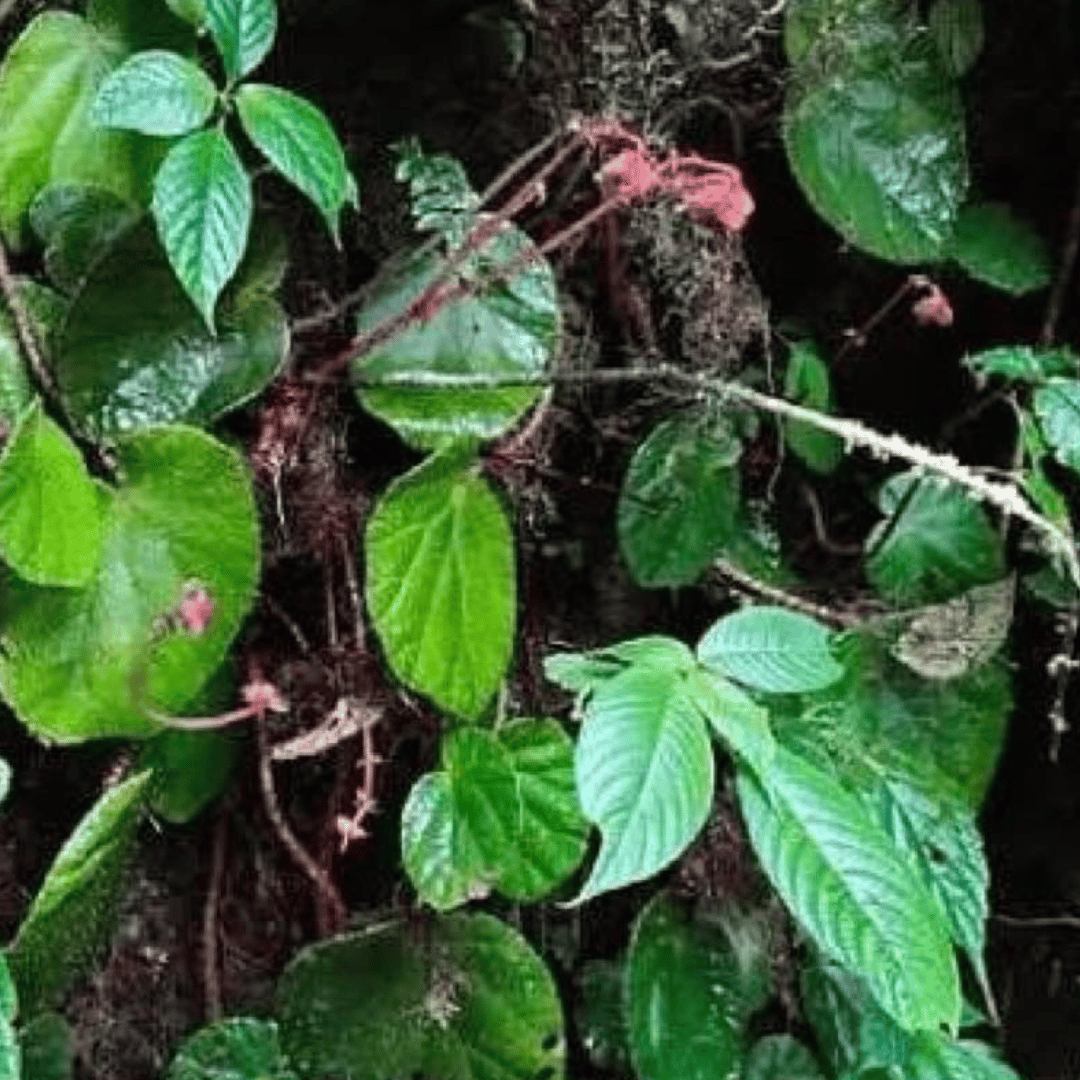
Discovered by forest officials from the Seppa Forest Division, the Begonia nyishiorum stands out with its distinctive crimson-fringed petioles, a feature reportedly unique among Asian begonias.
Chief Minister Pema Khandu lauded the discovery, highlighting Arunachal Pradesh's rich ecological heritage and its global importance in biodiversity. He also acknowledged the vital role of the Nyishi community as custodians of the forests.
This new find further underscores the immense biodiversity of the Eastern Himalayan region and emphasizes the critical need for continued conservation efforts and scientific research in the area.
People & Forests
A Tale of Two Foresters: Shaping India's Green Future
India's forestry story is brought to life by two remarkable individuals: Dietrich Brandis and Jadav Payeng. Separated by a century, their legacies paint a vivid picture of how our approach to forest conservation has evolved from colonial-era management to powerful community-led restoration.
Dietrich Brandis: The Architect of Indian Forestry
In 1856, German botanist Dietrich Brandis arrived in India, later becoming its first Inspector General of Forests in 1864. At a time of rampant deforestation for agriculture, timber, and railways, Brandis introduced a revolutionary concept: systematic forest management.
He championed scientific principles of silviculture, inventory, and sustainable yield. Brandis established forest departments, trained personnel, and laid down regulations to prevent overexploitation. His "top-down," state-driven approach curbed indiscriminate deforestation and set the stage for modern scientific forestry in India. His focus was on organized resource management, crucial for its time.
Jadav Payeng: The "Forest Man" and Grassroots Power
Fast forward to the late 20th and early 21st centuries, and meet Jadav Payeng. On a desolate island in the Brahmaputra, witnessing devastating erosion, a teenage Payeng began planting saplings, one by one.
For over four decades, through sheer individual perseverance, he transformed a barren wasteland into the lush, 1,360-acre Molai Forest. This incredible feat is a testament to nature's resilience and a vital haven for diverse wildlife, including elephants, tigers, and rhinos. Payeng embodies a "bottom-up," community-centric, and deeply personal commitment to ecological restoration.
From Management to Restoration: An Evolving Vision
The contrast between Brandis and Payeng is striking. Brandis established the foundational structures for managing existing forests, emphasizing scientific regulation and sustainable extraction within a colonial framework.
Payeng, on the other hand, embarked on the monumental task of creating a forest where none existed. This pivotal shift highlights a broader global movement: recognizing the intrinsic value of forests beyond just timber, embracing active ecological restoration, and championing community participation. Where Brandis sought to control and regulate, Payeng sought to heal and regenerate.
A Complete Picture of Conservation
Together, Dietrich Brandis and Jadav Payeng offer a holistic view of India's forestry journey. Brandis provided the essential scientific discipline and institutional framework. Payeng, through his tireless work, demonstrates that true forest conservation extends beyond mere management to active restoration, deep community involvement, and an unwavering love for the natural world.
Their combined stories powerfully remind us that safeguarding our forests requires both robust institutional frameworks and the unwavering dedication of individuals.
Call to Action
Call to action on Van Mahotsav!
Van Mahotsav is the perfect time for youth and students to connect with nature, embrace environmental responsibility, and contribute to a greener future! Here's how YOU can make a difference:
1. Embrace 'Ek Paudha Maa Ke Naam 2.0'
👩👧👦 Personalized Planting: Plant at least one sapling in the name of your mother or a beloved guardian. This personal connection makes all the difference!
🏷️ Name Your Sapling: Give your plant a special name – maybe something inspired by your mom or a quality you admire! It builds a stronger bond.
💧 Nurturing Responsibility: Remember, planting is just the start! Commit to regularly watering, protecting, and watching your sapling grow. It symbolizes your mom's nurturing spirit! Schools can even assign "plant parents" to ensure long-term care!
2. Hands-on Green Initiatives!
🏫 School Plantation Drives: Join tree-planting days at school, local parks, or community areas! Team up with forest departments or NGOs for guidance!
🏡 "My Green Corner" Project: Create a mini green space at home! Plant herbs, start a balcony garden, or nurture an indoor plant. Share your progress with friends! #MyGreenCorner
🌰 Seed Ball Making: Learn about native plants and make seed balls (seeds, clay, compost) to help barren areas regenerate naturally!
♻️ Composting Workshop: Discover how to turn kitchen and garden waste into nutrient-rich soil for your plants! It's all about reducing waste and feeding our greens!
Did You Know?
Arunachal Pradesh: A Biodiversity Hotspot Unveiling New Species (2023-2025)
Arunachal Pradesh, a biodiversity hotspot, has seen numerous new species discoveries in the last two years (roughly mid-2023 to mid-2025). Here's a list of some of the notable findings and their discovery locations:
Flowering Plants:
Begonia nyishiorum: Discovered in the high-altitude forests of East Kameng district. This new flowering plant is unique for its dense crimson, fringed scales on its light green petioles, a feature unseen in other Asian begonias. (Discovered between July 2024 - January 2025, published June 2025)
Koenigia arunachalensis: A small herbaceous plant found in Tawang district, specifically in alpine habitats such as Potak, Chuna, Tsechu, Bum La, Nagulapaas, Se La, and Bangajaan areas. (Discovered May 2025)
Begonia neisti: Found in the Dibang Valley district, specifically on moist hilly slopes between Hunli and Anini. This species is characterized by its patterned leaves with white-silver circular blotches and dark brownish-red blotches at the vein intersection. (Discovered during a floristic survey in 2023, published October 2024)
Gastrodia lohitensis: A new mycotrophic orchid species discovered in Lohit district. It is characterized by its unique white flowers and parallelly arranged oblong-linear calli along the labellum. (Discovered November 2024)
Henckelia arunachalensis: Discovered in the Patkai Hills near Miao in Changlang district. This plant has purplish-white flowers with dark blue stripes and two prominent white flaps inside the corolla. (Discovery published December 2024)
Phlogacanthus sudhansusekharii: A new plant species discovered from Itanagar Wildlife Sanctuary in Papum Pare district. (Discovered July 2024)
Ophiorrhiza gajureliana: This plant species, belonging to the Rubiaceae family, was discovered from Mayodia forest areas in Lower Dibang Valley district. (Discovered sometime around late 2024, as per the article mentioning it in December 2024)
Amphibians:
Xenophrys apatani (Apatani horned frog): Found in the Tale Wildlife Sanctuary in the Lower Subansiri Valley. Previously misidentified, genetic analysis confirmed it as a distinct species. (New classification in July 2024, though first reported in 2019)
Gracixalus patkaiensis: A green, almost transparent frog found in the Namdapha-Kamlang landscape (Patkai hills, low elevation). (Discovered by early 2024)
Alcalus fontinalis: A brown dwarf frog found in the Namdapha-Kamlang landscape, living in fast-flowing streams or brooks. (Discovered by early 2024)
Nidirana noadihing (music frog): Discovered in marshy areas of the Namdapha-Kamlang landscape, named after the Noa-Dihing river. (Discovered by early 2024)
Insects:
Euthalia malaccana (butterfly): Officially recorded for the first time in India, in Leparada district, specifically in Basar. This extends its known geographical range. (Documented between 2023 and 2024, published May 2025)
Caliphaea sinuofurcata (Bearded Bronzeback damselfly): Identified from Arunachal Pradesh. This is only the second species of the genus Caliphaea recorded in India. (Discovered May 2025)
Paraparatrechina neela (ant): A tiny, metallic blue ant discovered in Siang Valley, specifically in a tree hole in Yinku village. (Discovered June 2024)
Four new species of Darwin wasp subfamily (Microleptinae): Discovered during an expedition in the Siang Valley (Upper Siang, Siang, and East Siang districts) between 2022 and 2024.
Other Notable Discoveries (from late 2022 / early 2023, still within the "last two years" timeframe):
Sela Macaque (M. selai): A new species of primate found in the western and central parts of Arunachal Pradesh, near the Sela Pass. (Discovered 2022)
Skink Lizard (Protoblepharus Apatani): Discovered in Talle Valley Wildlife Sanctuary, named after the Apatani tribe. (Discovered 2022)
Cascade Frog (Amolops adicola): Named after the Adi Hills in Arunachal Pradesh, where it was discovered. (Discovered 2022)
These discoveries highlight the immense and still largely unexplored biodiversity of Arunachal Pradesh, emphasizing the critical need for continued research and conservation efforts in the region.